168 and Beyond: What Global Lucky Number Traditions Can Actually Teach You About Playing Smarter
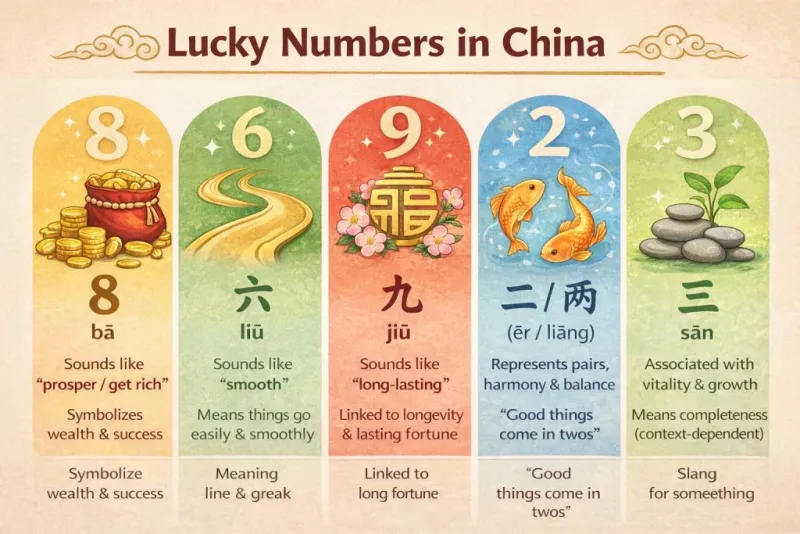
Photo: lucky numbers cultural symbols coins dice global traditions, via www.thechinajourney.com
If you've ever paused before picking your lottery numbers and wondered why you keep gravitating toward the same digits, you're not alone. Millions of players across the US do the same thing every single day — and it turns out, there's a whole world of cultural wisdom (and a fair bit of myth) wrapped up in those choices.
At Happy168, the number in our name isn't just decoration. In Chinese numerology, 168 is one of the most auspicious number combinations you'll find. Break it down phonetically in Cantonese and Mandarin, and it roughly translates to "all the way to prosperity" — a phrase you'd hear at a business opening, a wedding toast, or yes, a gaming session. That's not a coincidence. It's a cultural philosophy baked into how millions of people approach luck itself.
So what does that mean for you as a player? Let's dig in.
Why Numbers Mean Different Things in Different Rooms
Here in the US, most of us grew up hearing that 7 is lucky and 13 is cursed. Casinos in Las Vegas lean hard into that — slot machines light up with triple sevens, and you'd be hard-pressed to find a floor 13 in most major hotel towers. That's Western numerology doing its thing, quietly shaping the environments we play in.
But zoom out globally and the picture gets a lot more interesting. In Chinese culture, 8 is the gold standard of lucky numbers — its pronunciation sounds like the word for "prosperity," and the 2008 Beijing Olympics famously kicked off at 8:08 PM on August 8th for exactly that reason. Meanwhile, 4 is widely avoided because it sounds like the word for "death." You'll notice many Chinese-operated gaming platforms skip the number 4 in their branding entirely.
In Japanese tradition, 7 also carries positive energy, but 9 is considered unlucky for similar phonetic reasons to 4 in Chinese. Indian numerology leans heavily on birth date calculations, with numbers 1, 5, and 6 often favored for their associations with the sun, Mercury, and Venus respectively.
The point isn't that any of these systems are scientifically proven to change your odds. They don't. But understanding them helps you recognize something important: number preference is deeply psychological, and psychology absolutely affects how you play.
The 168 Effect in Modern Gaming Platforms
Here's where things get genuinely interesting from a strategy standpoint. Online gaming platforms — including lottery-style games, number-pick formats, and even slot themes — are increasingly being designed with multicultural audiences in mind. Developers know that a US player base now includes millions of people with roots in East Asia, South Asia, Latin America, and beyond, each bringing their own numerical intuitions to the table.
What this means practically is that certain number combinations in multiplayer or community-style games may see higher selection rates based on cultural clustering. In lottery-style formats where prize pools are split among winners, this is actually relevant information. If a huge portion of players are selecting 8, 18, 28, or 88 because of cultural association, those numbers may statistically result in split pots more often than, say, 13 or 4.
This isn't about superstition — it's about understanding human behavior at scale. Smart players use that awareness.
Debunking the Biggest Misconceptions About Lucky Numbers
Let's get honest for a second, because there's a lot of noise out there.
Misconception #1: Certain numbers are mathematically more likely to appear. In any properly regulated random number generator (RNG), every number has an equal probability of appearing. Full stop. No number is inherently "hot" or "due." If you've heard someone say a number hasn't come up in a while so it's bound to hit soon, that's the gambler's fallacy talking — and it's one of the most common traps players fall into.
Misconception #2: Using culturally lucky numbers gives you an edge over the house. It doesn't change your odds against the house at all. What it can do is affect your enjoyment and confidence during a session, which indirectly shapes how disciplined and focused you stay.
Misconception #3: Western players don't use numerology. Think again. Plenty of American players have personal "lucky numbers" tied to birthdays, anniversaries, or jersey numbers from their favorite athletes. That's numerology by another name. The difference is just cultural framing.
How to Actually Use This Knowledge at the Table (or Screen)
Okay, so you can't change your odds with a number. But you can use cultural number awareness to make smarter, more intentional choices. Here's how:
1. Know your own biases. Before your next session, think about which numbers you instinctively reach for and why. Are you avoiding certain numbers for superstitious reasons? Are you clustering around a few favorites? Awareness alone helps you play more deliberately.
2. In split-prize formats, consider less popular picks. If you're playing a format where the jackpot is divided among winners, choosing numbers that fewer players tend to select — often those in the 14–19 range or numbers associated with "bad luck" in popular culture — means you'd share with fewer people if you did win.
3. Don't let number attachment override your budget. This is the big one. Players sometimes chase specific number combinations across multiple sessions because they feel "owed" a win. That's when superstition becomes a liability. Set your session budget before you start, and stick to it regardless of how the numbers feel.
4. Embrace the ritual, not the result. There's genuine psychological value in having a pre-game ritual, including number selection. It can calm nerves and sharpen focus. Just keep it in perspective — it's about getting you into a good headspace, not summoning fortune.
The Bigger Picture: Luck as a Mindset, Not a Magic Formula
What's fascinating about the global tradition of lucky numbers is what it reveals about human nature. Across every culture, in every era, people have sought patterns and meaning in randomness. That impulse is universal — and it's not going away.
At Happy168, we think there's something genuinely beautiful about that. The number 168 represents a hope for continuous prosperity, a forward-moving energy that doesn't quit. Whether you're drawing on that tradition consciously or just vibing with the name, the underlying message is the same: show up, stay sharp, and keep moving toward your best game.
Lucky numbers won't rewrite the odds. But understanding where they come from — and how they shape the behavior of every player in the room — just might make you the smartest person at the table.